Skip to content

Thumb Position School for Cello

by Cassia Harvey

Instrumentation
Cello
Publisher
C. Harvey Publications
More by this composer

Purchase or download

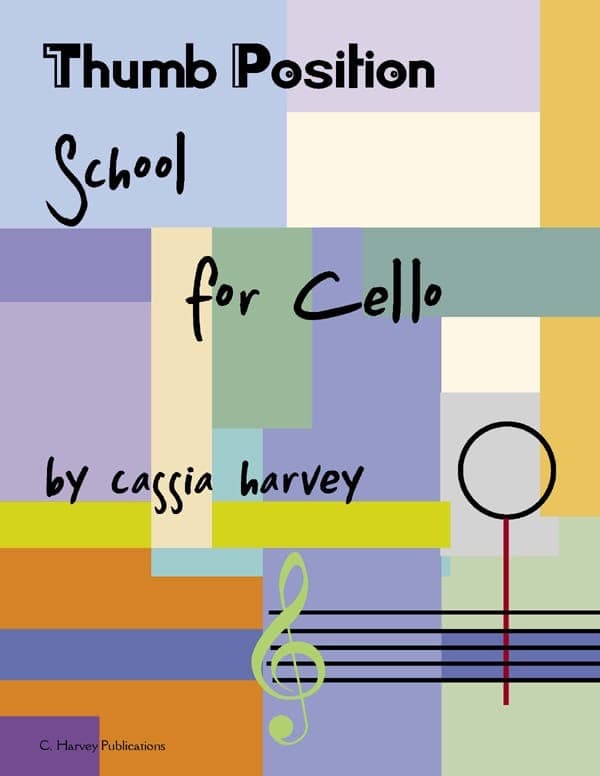
Cover of Thumb Position School for Cello
Cover courtesy of C. Harvey Publications

About this piece

Thumb Position School for the Cello is a method for learning the notes in thumb position. Focusing on the main position of “thumb on mid-string harmonic”, the book includes exercises and short pieces that teach the finger patterns in a number of different keys, high and low second finger, stretching in thumb position, reading both tenor and treble clef, and shifting with the thumb. This book works well alongside Thumb Position for the Cello, Book One, which focuses on shifting in and out of thumb position. An excellent introduction to cello thumb position, this book is a friendly and accessible method for students of all ages.

Technical overview

This advanced cello thumb position method also teaches treble clef and tenor clef.

Technical focus

  • Thumb Position

Level rubric

Early Advanced

Left Hand

  • Fully integrated thumb position; scales/arpeggios on A & D strings.
  • Smooth shifts into/out of thumb position for sustained high notes.
  • Frequent advanced double stops with rapid, coordinated shifts.
  • Accurate ornamentation (trills, turns, grace notes), even in double stops.
  • Expressively adjust intonation for chord balance.
  • Handle fast runs and large leaps precisely.
  • Introduction to false harmonics.

Right Hand

  • Virtuoso bow strokes: controlled up/down‑bow staccato, deliberate ricochet & well‑shaped sautillé.
  • Wide tone palette via precise bow adjustments.
  • Explore advanced effects (col legno, sul ponticello) as needed.
  • Capable of both powerful fortissimo and delicate soft notes.
  • Rapid switching among strokes in cadenzas/virtuosic passages.

Rhythm & Musicality

  • Apply rhythmic freedom & rubato to shape movements and cadenzas.
  • Personal interpretation with nuanced phrasing & subtle dynamics.
  • Mature tone and phrasing for solo and ensemble settings.
  • Demonstrate advanced ensemble leadership with visual cues.

Levels are approximate guides, not strict requirements.