Skip to content

Broken Thirds (One String) for the Cello, Book Two

by Cassia Harvey

Instrumentation
Cello
Publisher
C. Harvey Publications

Purchase or download
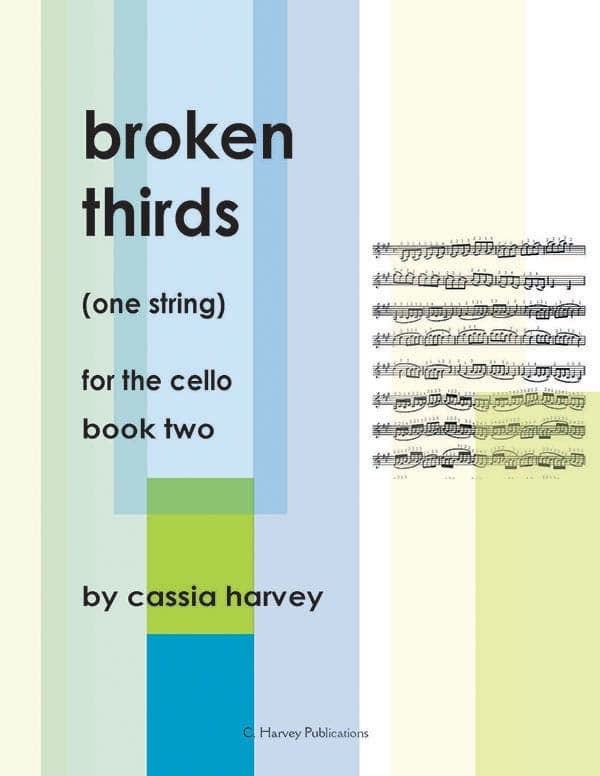
Cover of Broken Thirds (One String) for the Cello, Book Two
Cover courtesy of C. Harvey Publications

About this piece

Are you an advanced cellist looking for more intensive warm-ups? Are you looking for technical studies that take you beyond scales? This book can help! With studies on broken thirds up a single string, this book can help you shift better, develop muscle memory, and build a mental map of the entire fingerboard. While scales are the basis of cello technique, they only teach shifts of notes in order (for instance, A to B, or D to F). This book helps you study the slightly larger shifts that are found in such pieces as the Haydn Concerto in D Major.

Technical overview

This advanced cello technique book gives you exercises that teach your hand better shifting, speed, and intonation using broken thirds.

Level rubric

Advanced

Left Hand

  • Unrestricted fingerboard operation.
  • Effortless high‑register passages with thumb position.
  • Execute large leaps, rapid shifts & fast runs with precise intonation.
  • Render double stops with clarity and even vibrato.
  • Crisp, stylistically appropriate ornamentation (trills, turns, mordents).
  • Instinctive micro‑adjustments in intonation for expressiveness.
  • False harmonics in low positions

Right Hand

  • Complete command of all bow strokes at any tempo/dynamic.
  • Comfortable execution of virtuoso passages (sautillé, intricate ricochet).
  • Tone projection from whisper‑quiet to fortissimo.
  • Integrate advanced bow patterns with expressive phrasing.
  • Demonstrate technical precision with a broad dynamic range.

Rhythm & Musicality

  • Interpret large‑scale structures with nuanced pacing and rhythmic freedom.
  • Highly refined phrasing with subtle note grouping & expressive rubato.
  • Convey emotional depth and stylistic authenticity.
  • Incorporate personal interpretive choices while meeting stylistic demands.

Levels are approximate guides, not strict requirements.