
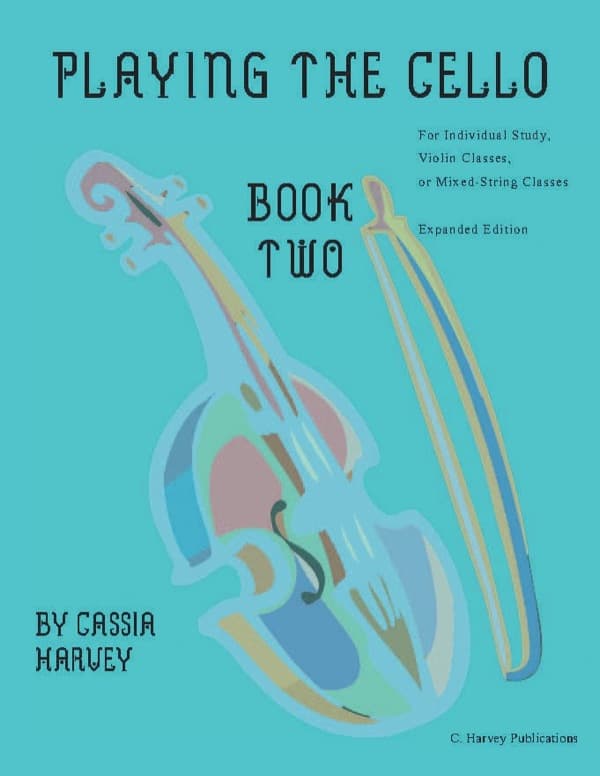
Playing the Cello, Book Two: Expanded Edition
by Cassia Harvey
- Instrumentation
- Cello
- Publisher
- C. Harvey Publications
Purchase or download
About this piece
Playing the Cello, Book Two combines catchy, enjoyable songs with easy exercises to help the early-intermediate cello student play as much as possible. With exercises for agility and finger patterns, this book helps train students in essential technique, while at the same time introducing students to cello fiddle tunes, classical pieces, and folk melodies. The aim of Playing the Cello, Book Two is to help the student with reading and playing skills, developing fluency that can help them in playing orchestra or solo music. With its emphasis on playable, fun tunes, this is a great supplement to other methods or studies! With studies in first and fourth positions, as well as extended first position, this is a useful introduction to intermediate skills on the cello. This book can be studied in private lessons, in cello classes, or in mixed string classes, along with Playing the Violin, Book Two and Playing the Viola, Book Two. This book could be played after Playing the Cello, Book One and followed by Getting in Shape for Cello.
Technical overview
This fun intermediate string class solo book helps you learn cello in private lessons or heterogeneous string classes.