
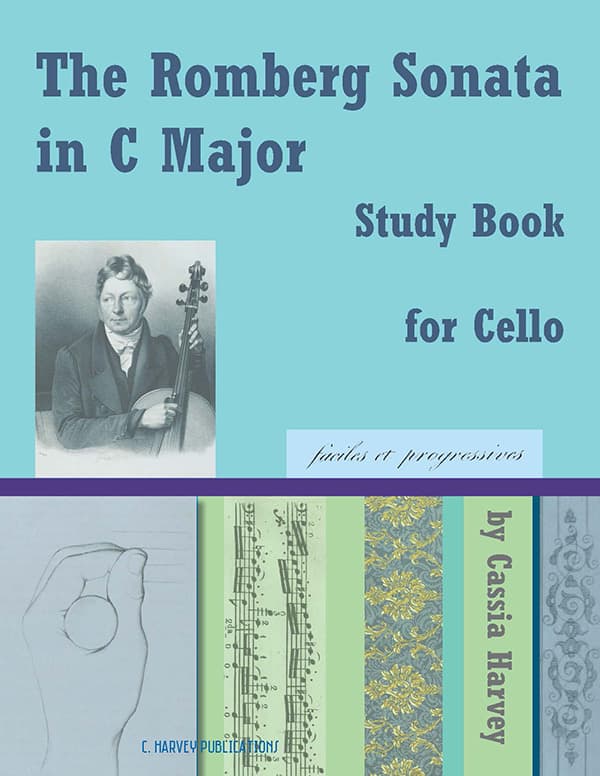
The Romberg Sonata in C Major Study Book for Cello
by Cassia Harvey
- Instrumentation
- Cello
- Publisher
- C. Harvey Publications
Purchase or download
About this piece
The Romberg Sonata in C Major Study Book for Cello helps you learn and perfect every measure of this essential teaching piece. The Sonata is broken down into short sections and taught through carefully graded exercises. Skills that would otherwise be difficult, such as agile bowing and shifting, can now be mastered. You can be free to concentrate on artistic expression by solidifying your cello technique. The Romberg Study Book gives you essential tools to be a better cellist. This book is appropriate for intermediate level cellists who have learned first through fifth positions and are ready for the next challenge. Fifth Position Preparatory Studies, Fifth Position for the Cello, and The C Major Scale Book are helpful preparatory books. No tenor clef is used in this book. The entire cello part to the Sonata is presented at the end of the book (the piano accompaniment is not included). The piano accompaniment to this piece is on IMSLP.
Technical overview
This intermediate cello method teaches every note of Romberg's Sonata in C Major measure by measure, step by step.